
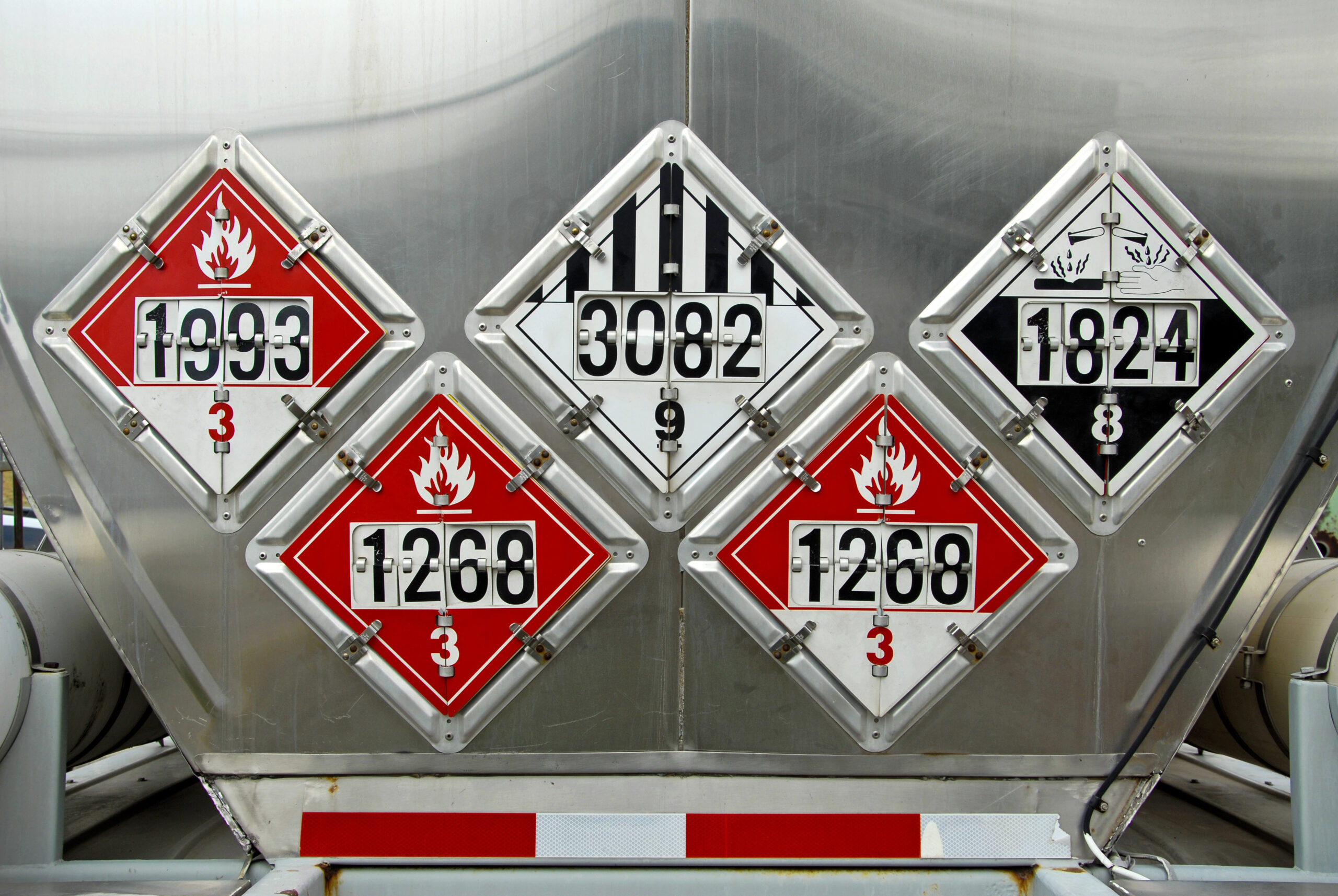
According to the Department of Transportation (DOT) regulations, any materials transported, whether in bulk or non-bulk quantities, must be properly labeled if the total weight exceeds 1,001 pounds. These labels or placards are essential for ensuring safety during transportation, as they clearly indicate the primary hazard associated with the transported materials.
Discussion Points:
- DOT Regulations for Placarding.
- Properly marking vehicles and containers for enhancing safety.
- Requirements for Placarding.
Discussion:
It is essential to display placards on all four sides of the vehicle or container, including freight containers. Proper labeling involves affixing placards that provide clear, concise information about the primary hazards associated with the transported materials, featuring the hazard class color, symbol, and class number. They must be securely attached, display horizontally, read from left to right, and durable to withstand 30 days of exposure to the elements. These placards serve as vital indicators for emergency responders and others who may come into contact with the transport vehicle. By communicating the potential risks, these labels help ensure that all necessary precautions are taken to prevent accidents and protect public safety during the transportation of potentially dangerous materials.
Requirements for Placarding:
- Placards are always required for bulk containers to ensure proper identification and safety.
- Placards are required when the total weight of hazardous materials in a shipment exceeds 1,001 pounds.
- Certain high-risk items always require placards, including explosives, poisonous gases, hazardous materials when wet, organic peroxides, inhalation hazards, and radioactive materials.
- For mixed shipments of non-bulk, Table 1 hazardous materials such as flammable liquids and corrosives, placards are required if the total weight exceeds 1,001 pounds.
- Materials not listed in Table 1 and weighing less than 1,001 pounds do not require placards.
- For mixed loads containing two or more materials from Table 2 that require different placards, placards are required if the total weight exceeds 1,001 pounds. If a facility loads 2,005 pounds or more of a single category, the placard for that specific category must still be displayed.
- Bulk shipments must display the four-digit UN identification number on the placard, an orange panel, or in a white square-on-point configuration.
- A Class 9 placard is not necessary for domestic transportation within the United States.
- Combustible liquids stored in non-bulk packaging are usually not required to have placards.
- Secure with placard holders or high-grade adhesives.
It’s essential to review the guidelines for each specific hazard class, as regulations can vary greatly from one classification to another. Each hazard class has its own unique set of rules and recommendations for the safe handling, storage, and disposal of materials. Taking the time to understand these regulations thoroughly ensures compliance and contributes to a safer working environment.
As always, stay safe out there!
Recent Comments