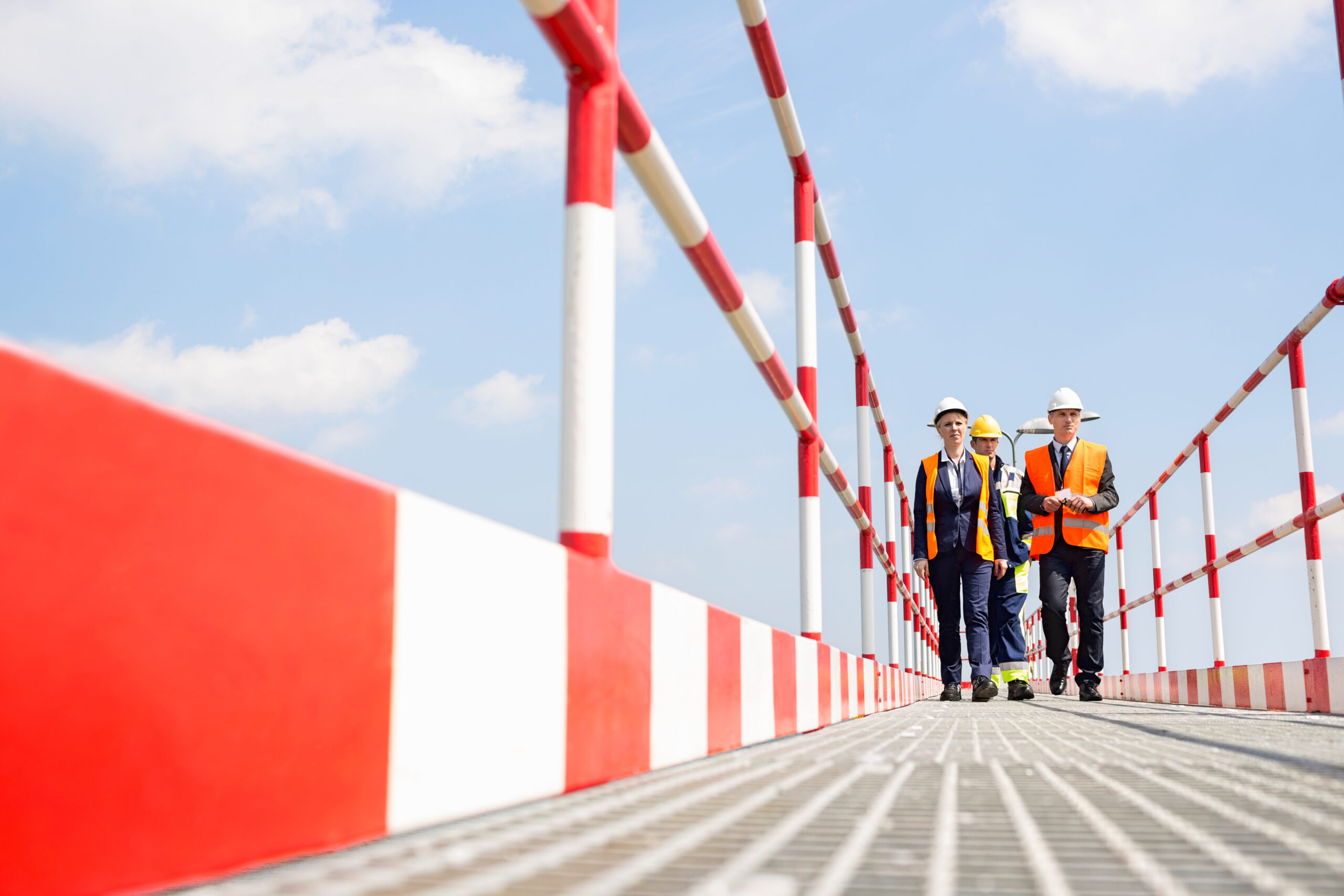
Falls are among the most common workplace accidents, resulting in serious injuries or fatalities. Railings and guardrails are essential safety features that serve as physical barriers to help prevent accidental falls from elevated work areas.
Discussion Points:
- Safety Standards and Regulations.
- Materials and Durability.
- Maintenance and Inspections.
- Applications and Usage.
Discussion:
Railings and guardrails are essential for providing support and reassurance, helping to prevent individuals from slipping or losing their balance while using stairs, elevated platforms, docks, roofs, scaffolding, and other raised areas. By incorporating these protective measures, we can create a safer working environment that significantly reduces the risk of fall-related injuries.
Protective Measures to Prevent Falls:
- Guardrails are required whenever there is an elevation change of 4 feet or more, especially in areas where workers could fall into dangerous equipment.
- Regulations specify that railings and guardrails must be at least 42 inches high, measured from the top rail to the walking-working surface.
- The handrail should have a circular cross-section with an outside diameter of 1¼ to 2 inches.
- The top rail should withstand a downward or outward force of at least 200 pounds.
- Midrails are necessary between the top rail and the walking-working surface, along with mesh that extends from the walking-working surface to the top rail, covering the entire opening between rail supports.
- Balusters should be installed no more than 19 inches apart and must withstand a force of at least 150 pounds.
- If workers are working below, toeboards must be at least 3.5 inches tall and withstand a force of 50 pounds.
- Guardrails are essential around access points, such as ladderways.
- The opening in the guardrail system must be equipped with a self-closing gate that slides or swings away from the opening.
- Guardrails should be installed along unprotected sides or edges of ramps and runways.
- Railings and guardrails must be durable and resistant to environmental factors, including moisture, sunlight, and extreme temperatures. Common materials used include steel, aluminum, and wood.
- It’s advisable to paint guardrails a bright yellow, which is a recognized warning color, or to mark them at regular intervals to highlight potential hazards.
- Railings should have a smooth surface to prevent punctures, lacerations, or snagging of clothing.
- Regular inspections and maintenance of railings and guardrails are essential to ensure their effectiveness and integrity.
- OSHA standards require routine inspections of these devices for loose balusters, weakened connectors, and signs of corrosion, peeling paint, and rotting wood.
Staying informed about the latest standards is vital to ensure compliance and safety. Employers demonstrate their commitment to workers’ well-being by complying with regulations and providing a safe working environment. Failure to adhere to these guidelines can result in fines and legal consequences.
As always, stay safe out there!