
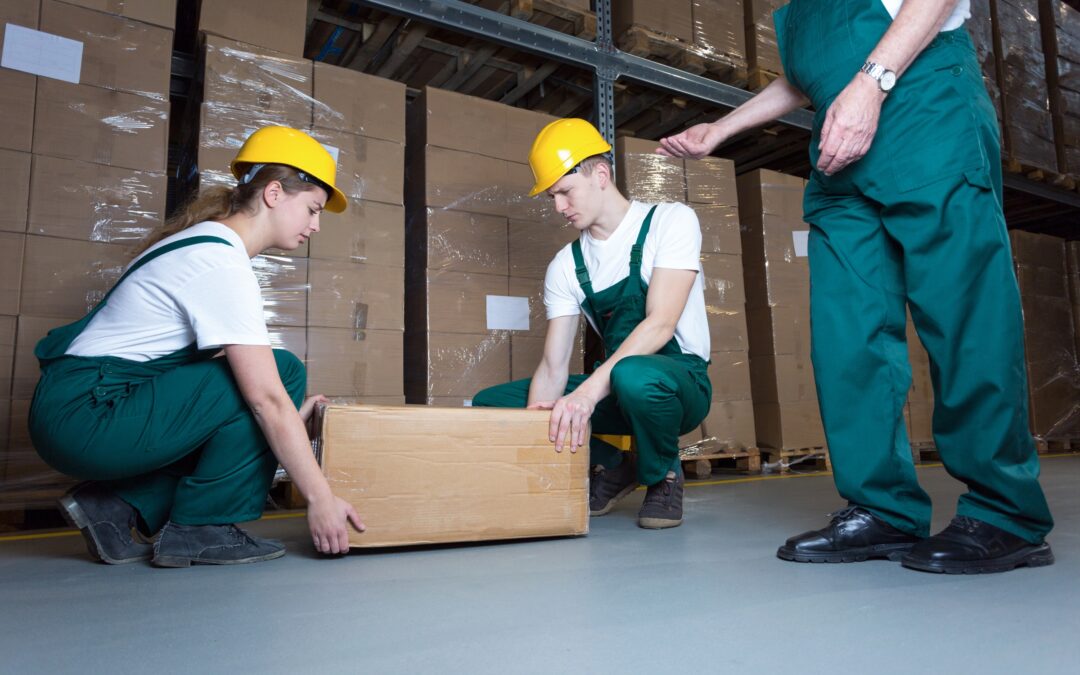
Using proper lifting techniques is essential for preventing injuries when manually handling heavy objects. Lifting incorrectly increases the risk of strains, sprains, and other musculoskeletal injuries. These injuries can result in significant pain, loss of productivity due to missed workdays, and potential long-term health problems.
Discussion Points:
- Understand safe lifting techniques to reduce the risk of injury.
- Follow best practices for safely lifting objects.
- Use mechanical aids to lift heavy items that cannot be moved manually.
Discussion:
Safe lifting techniques focus on the body’s strongest muscles to minimize the risk of injury. This includes engaging the leg muscles for lifting, maintaining a stable stance, and keeping your back straight while bending at the hips and knees.
Always use proper lifting techniques to prevent injury when handling heavy objects. To lift safely, follow these best practices:
- Before lifting, plan your route and be aware of any obstacles you may encounter.
- Ensure you are wearing appropriate clothing that allows for ample movement. Wear steel-toe boots with good tread for stability.
- Assess the object’s weight and size to determine if it is manageable. Test the weight by gently pushing or nudging it.
- If the object is too heavy or awkward to lift by yourself, do not attempt it. Request assistance from a co-worker or use mechanical aids such as a forklift, cart, or dolly.
- Stand close to the object with your feet shoulder-width apart to create a stable base. Distribute your weight evenly on both feet and keep your shoulders back.
- Securely grip the object and keep it close to your body to minimize strain on your back.
- Always lift with your legs by bending at the knees, not at the waist. Power the lift by straightening your legs in a smooth motion.
- Keep your back straight and your head up while lifting. Avoid twisting your body while carrying the load; instead, pivot your feet to change direction.
- Consider using lifting straps or gloves to help distribute the weight and reduce strain. Wearing a back support belt or brace can also provide additional stability.
- Ensure the load does not obstruct your vision while walking.
- When lowering the load to the floor, bend your knees and keep your back straight.
- To ensure safe lifting practices, take regular breaks and alternate your tasks throughout the day. This helps prevent overexertion and reduces the risk of injury.
- Regular stretching can relieve muscle tension and stiffness in your back.
By following these best practices for safe lifting, you can help ensure a safer lifting experience and reduce the risk of injury. Always prioritize your health and take proactive measures to prevent injuries before they happen. If you experience any pain or discomfort while lifting, stop immediately and report it to your supervisor. Ignoring pain can lead to further damage and long-term issues. Remember, safety should always be your top priority when manually handling loads.
As always, stay safe out there!
Recent Comments