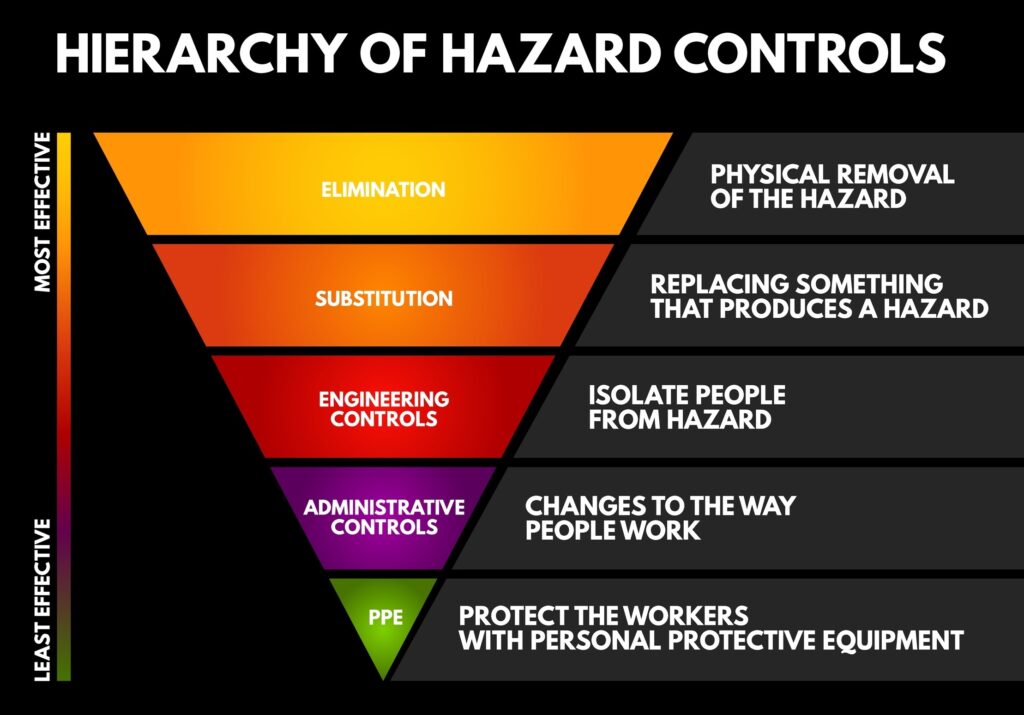
Common workplace hazards include poor housekeeping, working at heights, improper use of extension cords, and exposure to unknown chemicals. If these hazards are not properly managed, they can result in serious injuries or fatalities. To effectively handle hazardous situations, workers need to understand and apply the Hierarchy of Controls.
Discussion Points:
- The significance of the Hierarchy of Controls concept in ensuring workplace safety.
- The five levels of actions to reduce or eliminate hazards.
- The importance of continuously evaluating the effectiveness of current controls.
- The procedure for identifying new hazards.
- Effectively managing risks.
Discussion:
The Hierarchy of Controls is a system designed to minimize or eliminate exposure to workplace hazards by prioritizing control methods based on their effectiveness. Understanding this concept is essential for implementing effective hazard prevention and enhancing workplace safety.
The Hierarchy of Controls consists of five levels of actions to reduce or remove hazards:
- Elimination
- Substitution
- Engineering Controls
- Administrative Controls
- Personal Protective Equipment (PPE)
The most effective way to control a hazard is through elimination, which means removing the hazard from the workplace entirely. This is the preferred solution for protecting workers since it ensures that there is no possibility of exposure.
If elimination is not feasible, the next best option is substitution, which involves replacing hazardous material, process, or piece of equipment with a less dangerous alternative. This can significantly reduce risk. When evaluating a substitute, it is crucial to compare the potential new risks it may pose against the original risks. Effective substitutes should mitigate harmful effects without introducing new risks.
Both elimination and substitution are most effectively implemented in the early stages of a project. Since both involve changes to equipment and procedures, implementing these solutions becomes increasingly challenging as the project progresses.
When hazards cannot be eliminated or substituted, control measures must be implemented. Engineering controls involve physical changes that isolate employees from the hazard. Administrative controls alter work practices and procedures to reduce exposure from these hazards. As a last line of defense, personal protective equipment (PPE) includes items worn by workers to safeguard against hazards when other controls are inadequate. Although PPE is crucial for safety, it is most effective when used in conjunction with higher-level controls.
Managing risks requires a comprehensive approach that includes identifying, assessing, and controlling hazards. It is crucial to regularly evaluate the effectiveness of the controls in place to ensure they continue to mitigate risks. Continuous assessment allows us to adapt to changing conditions or new hazards, enabling us to address risks proactively before they result in accidents or injuries.
By following this hierarchy, we can create safer working environments and effectively manage risks. Ultimately, this approach protects employees and ensures compliance with health and safety regulations.
As always, stay safe out there!